
Benefits of Industrial Automation
author: PLC-SUPPLY
2022-12-22

Benefits of Industrial Automation
Due to the benefits offered by the integration of industrial automation technology—including increased production speed, better quality control, and improved safety—manufacturing facilities in nearly every industry are increasingly choosing to adopt it over traditional manual or mechanized methods. Some of the most important benefits include:
Improve manufacturing quality and flexibility
One of the hallmarks of manufacturing excellence is better quality, ie lower overall production error rates. Automated manufacturing and assembly equipment, such as CNC machines, have integrated programs designed to handle repetitive tasks with an increasingly low error rate. In addition, these machines can be programmed to immediately perform new operations and additional steps in the assembly process.
increase productivity
Compared to manually operated facilities, automated manufacturing facilities offer the ability to operate faster and continuously without the risk of errors due to operator fatigue. While industrial automation may still require some human inspection and oversight, automated processes are much more productive per worker on a manufacturing floor than manual or mechanical processes.
cut costs
Despite the high initial cost, industrial automation can help facilities reduce overall costs by:
Integrate analytics tools into processes to minimize data collection and management costs.
Reduce overall labor costs such as wages, benefits, and other healthcare costs.
Integrate sensors and automated alerts to reduce the risk of equipment failure or service disruption.
Safety
Automated processes are safer because they require less operator involvement. Instead of taking on the role of operator, human supervisors can monitor tasks and production from a safer distance, while machines can handle tasks with potentially hazardous materials or equipment, such as:
Chemicals
sharp metal and equipment
Heavy Materials and Equipment
Materials requiring extreme high or low temperatures
Electronic equipment
Due to the benefits offered by the integration of industrial automation technology—including increased production speed, better quality control, and improved safety—manufacturing facilities in nearly every industry are increasingly choosing to adopt it over traditional manual or mechanized methods. Some of the most important benefits include:
Improve manufacturing quality and flexibility
One of the hallmarks of manufacturing excellence is better quality, ie lower overall production error rates. Automated manufacturing and assembly equipment, such as CNC machines, have integrated programs designed to handle repetitive tasks with an increasingly low error rate. In addition, these machines can be programmed to immediately perform new operations and additional steps in the assembly process.
increase productivity
Compared to manually operated facilities, automated manufacturing facilities offer the ability to operate faster and continuously without the risk of errors due to operator fatigue. While industrial automation may still require some human inspection and oversight, automated processes are much more productive per worker on a manufacturing floor than manual or mechanical processes.
cut costs
Despite the high initial cost, industrial automation can help facilities reduce overall costs by:
Integrate analytics tools into processes to minimize data collection and management costs.
Reduce overall labor costs such as wages, benefits, and other healthcare costs.
Integrate sensors and automated alerts to reduce the risk of equipment failure or service disruption.
Safety
Automated processes are safer because they require less operator involvement. Instead of taking on the role of operator, human supervisors can monitor tasks and production from a safer distance, while machines can handle tasks with potentially hazardous materials or equipment, such as:
Chemicals
sharp metal and equipment
Heavy Materials and Equipment
Materials requiring extreme high or low temperatures
Electronic equipment
 About the classification, application and development of PLC
  There is a problem with PLC, how to quickly find the cause?
  How many communication methods does Siemens PLC have?
  Siemens PLC S7-300 has communication failure and remote maintenance method
  What are the series and characteristics of Siemens PLC
  Summary of Siemens PLC selection method 2
 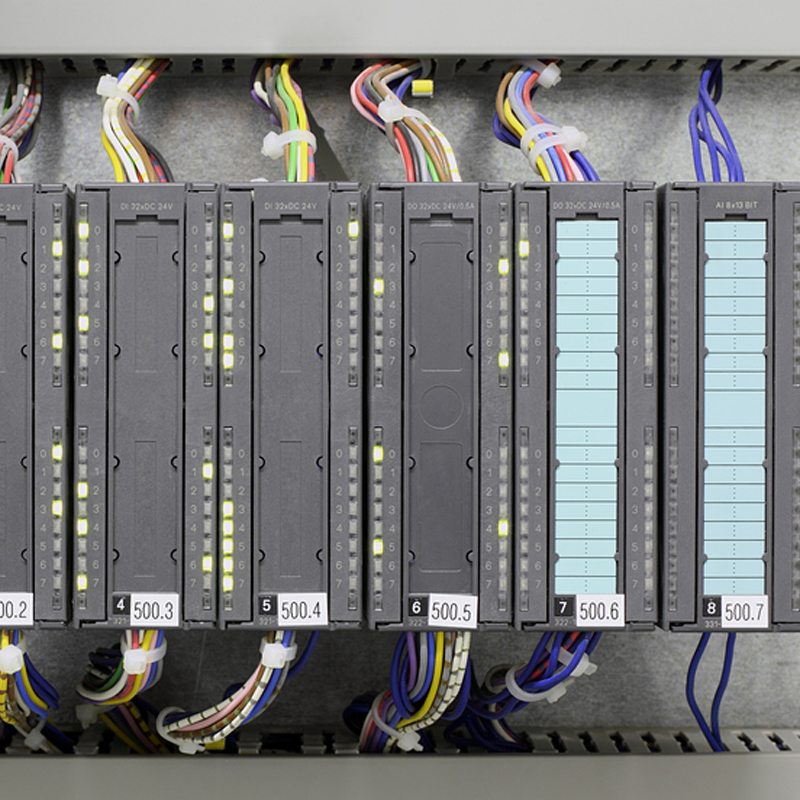 Summary of Siemens PLC selection method 1
  What Applications Would You Use PLCs? - Exploring the Widespread Use of Programmable Logic Controllers
  Is PLC Used in Robotics? - Understanding the Role of PLCs in Robotics
  Is PLC Programming Hard? - A Comprehensive Guide to PLC Programming
  What is a PLC in Business?
  What is a PLC Used For?
  What is a Ladder Diagram in PLC?
  Why Doesn't Smart Switch Work on My PLC?
 - Why are PLC Installed Inside an Enclosure?
 Why Are Logical Racks Used in PLC?
  Why There is a Need of PLC in Industry
  Why the PLC is Important
  Why Some PLC Use Only the Basic Additions
  Why Scaling is Done in PLC