
Is PLC Used in Robotics? - Understanding the Role of PLCs in Robotics
2023-05-31

Robots have come a long way in manufacturing, performing an array of tasks that were once considered impossible for a machine. To accomplish this, robots rely on a powerful combination of hardware and software, including Programmable Logic Controllers (PLCs). In this article, we explore the role of PLCs in robotics, and whether they are commonly used or not.
What are PLCs?
Programmable Logic Controllers (PLCs) are digital computers used to control automation processes in manufacturing, chemical plants, and other industrial settings. PLCs are designed to execute specific control functions based on input signals, enabling them to regulate industrial equipment systems.

The Role of PLCs in Robotics
PLCs can play a crucial role in the operation of robotics, serving as the "brains" of the robotic system. Robots must use a range of sensors to operate, from proximity sensors to limit switches, and more. PLCs can process these signals from the sensors and direct the robot's behavior correctly.
PLCs can also be used to regulate robotic operations, such as determining how quickly the robot moves, how much energy it uses, and more. PLCs can also log data from the robotic system, such as energy usage, system performance, and more. This data can then be analyzed and used to make improvements to the robotic system.

Types of Robotics and PLCs
There are various types of robots, and different kinds of robots require different types of controllers. The type of robot will influence the choice of controller systems, and whether to use a PLC or not. For instance, collaborative robots, or cobots, are typically programmed with more sophisticated controllers that allow them to take on complex tasks.
On the other hand, industrial robots that are used in repetitive tasks, like machine tending, painting, and spot welding, typically use traditional Programmable Logic Controllers (PLCs). The PLCs send machine code instructions to the robot and support synchronization of motion and timing control to enhance production efficiency.

Benefits of Using PLCs in Robotics
PLCs provide distinct advantages over other controllers in robotics:
1. PLCs have a high degree of accuracy and consistency, which is particularly useful in tasks like quality control.
2. PLCs are flexible and can be quickly reprogrammed to accommodate new tasks and adapt to new environments.
3. PLCs are highly reliable and built to endure the harsh industrial settings, making them ideal for robotics applications.

Conclusion
PLCs have become an essential part of robotics, particularly with the advancements in manufacturing technology. As robots become increasingly sophisticated and complex, they require advanced software and control systems - such as a PLC - to operate efficiently and effectively. PLCs offer flexibility, accuracy, and reliability, making them an invaluable component of robotics technology.
In conclusion, PLCs are commonly used in industrial and collaborative robots, providing precise and accurate control systems that are vital to these sophisticated machines. We hope this article has provided you with a better understanding of the use of PLCs in robotics.
 About the classification, application and development of PLC
  There is a problem with PLC, how to quickly find the cause?
  How many communication methods does Siemens PLC have?
  Siemens PLC S7-300 has communication failure and remote maintenance method
  What are the series and characteristics of Siemens PLC
  Summary of Siemens PLC selection method 2
 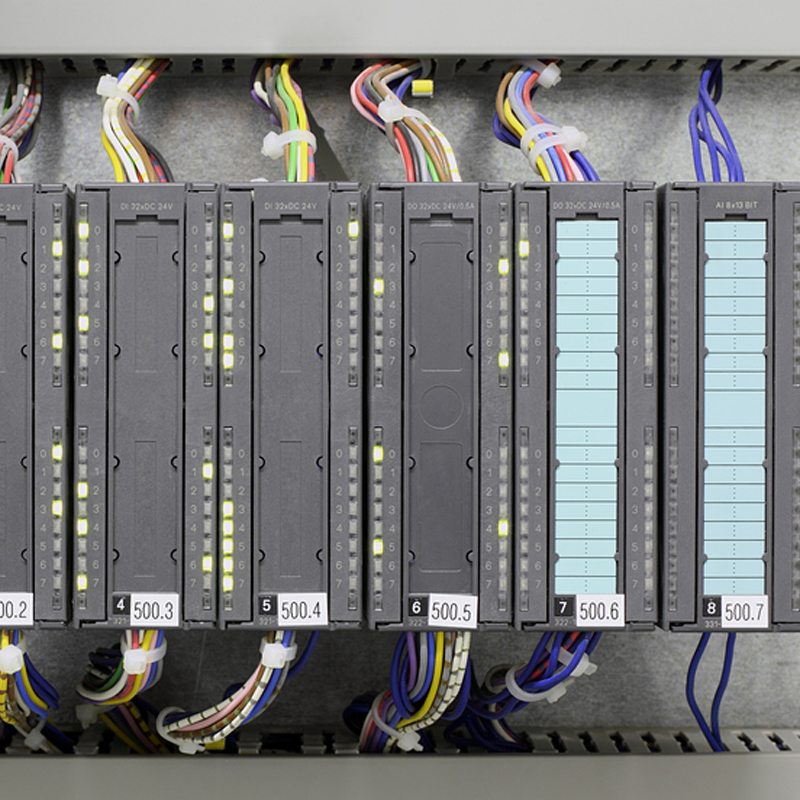 Summary of Siemens PLC selection method 1
  What Applications Would You Use PLCs? - Exploring the Widespread Use of Programmable Logic Controllers
  Is PLC Programming Hard? - A Comprehensive Guide to PLC Programming
  What is a PLC in Business?
  What is a PLC Used For?
  What is a Ladder Diagram in PLC?
  Why Doesn't Smart Switch Work on My PLC?
 - Why are PLC Installed Inside an Enclosure?
 Why Are Logical Racks Used in PLC?
  Why There is a Need of PLC in Industry
  Why the PLC is Important
  Why Some PLC Use Only the Basic Additions
  Why Scaling is Done in PLC
  Why PLC is Important in Education