
What Applications Would You Use PLCs? - Exploring the Widespread Use of Programmable Logic Controllers
2023-05-31

Programmable Logic Controllers (PLCs) are an essential component of industrial automation. They are used in various applications, from manufacturing and building automation to food processing and renewable energy systems. In this article, we explore the widespread use of PLCs and examine the types of applications for which they are used.
What are PLCs?
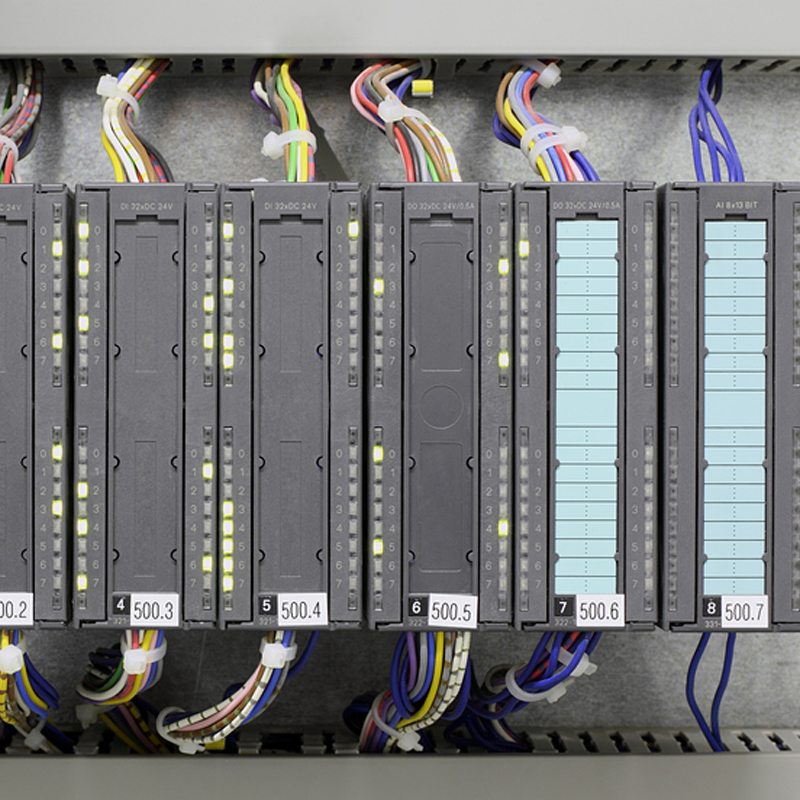
Programmable Logic Controllers (PLCs) are digital computers used in industrial control applications. They are designed to execute specific control tasks based on input signals from sensors or other input devices, making them ideal for automating industrial processes. PLCs have become a widely used control system due to their flexibility, reliability, and ability to operate in industrial environments.

Applications for PLCs
PLCs are utilized in numerous applications across various industries. Here are some examples of where PLCs are commonly employed:
Manufacturing Industries
- Assembly lines: PLCs are used to control the production process in assembly lines. They aid in ensuring that the right parts are delivered at the right time.
- Robotics: PLCs are used to control robots, enabling them to perform specific tasks with high accuracy and speed.
- Material handling: PLCs are utilized to control material handling equipment, such as palletizers, conveyors, and cranes.

Building Automation
- Elevators and escalators: PLCs are used to control the speed, direction, and braking of elevators and escalators.
- HVAC: PLCs are utilized to control and automate heating, ventilation, and air conditioning systems in buildings.
- Lighting systems: PLCs are used to control lighting systems automatically or manually.

Energy and Utilities
- Renewable energy systems: PLCs are used to control wind turbines, solar panels, and other renewable energy systems.
- Water treatment plants: PLCs are utilized to control the treatment process, including chemical dosages, pumps, and filtration systems.
- Oil and gas refining: PLCs are used to control systems that regulate the flow of oil and gas processes.

Benefits of PLCs
PLCs provide numerous benefits, including:
- Flexibility: PLCs are flexible and can be programmed to perform various control tasks in different applications.
- Reliability: PLCs are designed to function in harsh industrial environments, making them highly reliable.
- Efficient: PLCs can process data and make decisions quickly, reducing downtime and increasing production efficiency.
- Customization: PLCs can be customized to meet specific application requirements, providing precise control.
Conclusion
PLCs are essential components in the automation of industrial processes in all kinds of applications. Integrating PLCs with industrial machines and equipment ensures higher efficiency, reduces human error, and increases safety. With a vast range of benefits, PLCs have made industrial automation more accessible, safer, and more reliable. We hope this article has provided you with valuable insights into the widespread use of PLCs and the variety of applications they can be applied to.
 About the classification, application and development of PLC
  There is a problem with PLC, how to quickly find the cause?
  How many communication methods does Siemens PLC have?
  Siemens PLC S7-300 has communication failure and remote maintenance method
  What are the series and characteristics of Siemens PLC
  Summary of Siemens PLC selection method 2
  Summary of Siemens PLC selection method 1
  Is PLC Used in Robotics? - Understanding the Role of PLCs in Robotics
  Is PLC Programming Hard? - A Comprehensive Guide to PLC Programming
  What is a PLC in Business?
  What is a PLC Used For?
  What is a Ladder Diagram in PLC?
  Why Doesn't Smart Switch Work on My PLC?
 - Why are PLC Installed Inside an Enclosure?
 Why Are Logical Racks Used in PLC?
  Why There is a Need of PLC in Industry
  Why the PLC is Important
  Why Some PLC Use Only the Basic Additions
  Why Scaling is Done in PLC
  Why PLC is Important in Education