
What are PLCs?
2023-05-04

Programmable Logic Controllers, or PLCs, are specialized computers widely used in industrial automation and control applications. They provide a reliable, flexible, and user-friendly platform for managing complex processes and controlling various types of machinery, making them indispensable in industries like manufacturing, oil and gas, and utilities. This article aims to provide a comprehensive overview of PLCs, including their history, key components, programming languages, and application examples.

1. History of PLCs
The birth of PLCs dates back to the late 1960s when manufacturers sought a more efficient, flexible, and cost-effective alternative to conventional relay-based control systems that were bulky, error-prone, and difficult to modify. Richard Morley, an engineer at Bedford Associates, introduced the first PLC, known as the Modicon 084, in 1969. Since then, PLCs have steadily evolved to incorporate advanced processing capabilities, networking features, and a broader range of input/output (I/O) options, making them the backbone of modern industrial automation.

2. Key Components of PLCs
The primary components of a typical PLC system include:
- Processor (CPU): The "brain" of the PLC, responsible for executing control programs, managing memory, and handling I/O communication.
- Memory: Used for storing user programs, I/O data, and system parameters. Common types of memory in PLCs include ROM (Read-Only Memory), RAM (Random Access Memory), and EEPROM (Electrically Erasable Programmable Read-Only Memory).
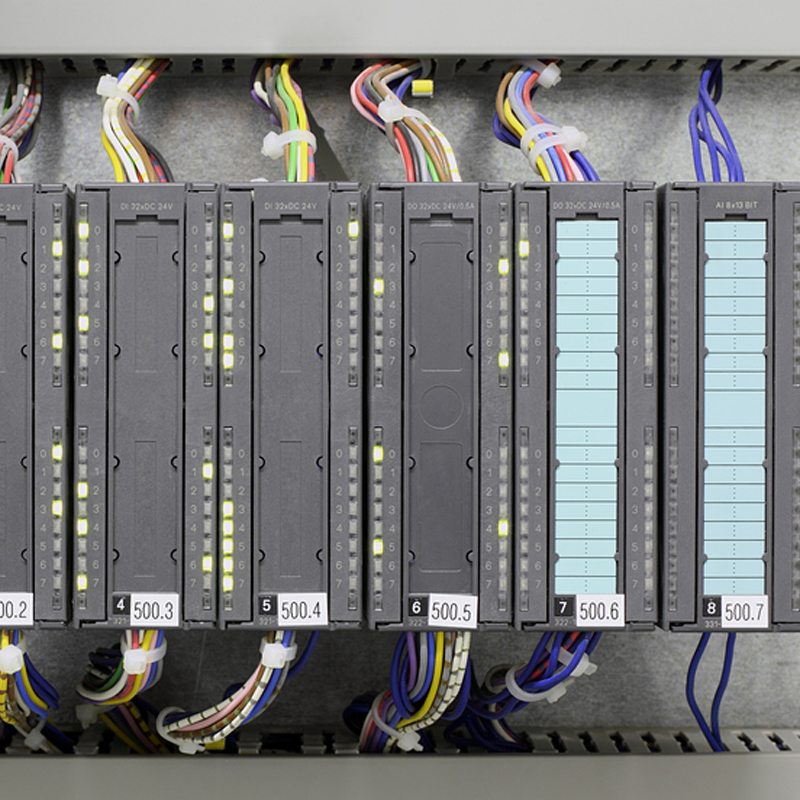
- Input/Output (I/O) Modules: Devices that interface with external equipment, including sensors, actuators, and switches. I/O modules convert real-world signals into electrical signals that can be processed by the PLC.
- Communication Ports: Facilitate data exchange between the PLC and other devices, such as Human-Machine Interfaces (HMIs), personal computers, or other PLCs. Among the widely used communication protocols are Ethernet/IP, Profibus, and Modbus.
- Memory: Used for storing user programs, I/O data, and system parameters. Common types of memory in PLCs include ROM (Read-Only Memory), RAM (Random Access Memory), and EEPROM (Electrically Erasable Programmable Read-Only Memory).
- Input/Output (I/O) Modules: Devices that interface with external equipment, including sensors, actuators, and switches. I/O modules convert real-world signals into electrical signals that can be processed by the PLC.
- Communication Ports: Facilitate data exchange between the PLC and other devices, such as Human-Machine Interfaces (HMIs), personal computers, or other PLCs. Among the widely used communication protocols are Ethernet/IP, Profibus, and Modbus.

3. PLC Programming Languages
PLC programmers use various programming languages to create, edit, and troubleshoot control programs that run on PLCs. The International Electrotechnical Commission (IEC) standardized five PLC programming languages under IEC 61131-3:
- Ladder Diagram (LD): A graphical language resembling circuit diagrams; familiar to those with a background in electrical control systems.
- Function Block Diagram (FBD): A graphical language that represents control algorithms as interconnected functional blocks.
- Structured Text (ST): A text-based, high-level language similar to Pascal or C.
- Instruction List (IL): A low-level, text-based language analogous to Assembly Language.
- Sequential Function Chart (SFC): A graphical language that depicts control processes as interconnected steps or transitions.
- Function Block Diagram (FBD): A graphical language that represents control algorithms as interconnected functional blocks.
- Structured Text (ST): A text-based, high-level language similar to Pascal or C.
- Instruction List (IL): A low-level, text-based language analogous to Assembly Language.
- Sequential Function Chart (SFC): A graphical language that depicts control processes as interconnected steps or transitions.

4. PLC Applications
PLCs are utilized across a wide range of industries and applications, such as:
- Manufacturing: PLCs control assembly lines, robotic systems, and packaging machinery, ensuring efficient and high-quality production.
- Utilities: In power generation plants, PLCs manage complex operations like turbine control, grid synchronization, and fuel handling.
- Oil and Gas: PLCs maintain safe and efficient operations in oil refineries, wellhead control systems, and pipeline management systems.
- Transportation: PLCs are integral to traffic light control systems, railway signaling, and baggage handling at airports.
- Building Automation: PLCs help to manage lighting, elevators, heating, ventilation, and air conditioning systems in modern buildings.
- Utilities: In power generation plants, PLCs manage complex operations like turbine control, grid synchronization, and fuel handling.
- Oil and Gas: PLCs maintain safe and efficient operations in oil refineries, wellhead control systems, and pipeline management systems.
- Transportation: PLCs are integral to traffic light control systems, railway signaling, and baggage handling at airports.
- Building Automation: PLCs help to manage lighting, elevators, heating, ventilation, and air conditioning systems in modern buildings.

Conclusion
PLCs play a crucial role in the world of industrial automation, providing a flexible and reliable platform to control complex processes and machinery. With a solid understanding of their history, components, programming languages, and applications, you can appreciate the significance of PLCs in a wide range of industries and the vital role they play in our modern, technology-driven world.
 About the classification, application and development of PLC
  There is a problem with PLC, how to quickly find the cause?
  How many communication methods does Siemens PLC have?
  Siemens PLC S7-300 has communication failure and remote maintenance method
  What are the series and characteristics of Siemens PLC
  Summary of Siemens PLC selection method 2
  Summary of Siemens PLC selection method 1
  What Applications Would You Use PLCs? - Exploring the Widespread Use of Programmable Logic Controllers
  Is PLC Used in Robotics? - Understanding the Role of PLCs in Robotics
  Is PLC Programming Hard? - A Comprehensive Guide to PLC Programming
  What is a PLC in Business?
  What is a PLC Used For?
  What is a Ladder Diagram in PLC?
  Why Doesn't Smart Switch Work on My PLC?
 - Why are PLC Installed Inside an Enclosure?
 Why Are Logical Racks Used in PLC?
  Why There is a Need of PLC in Industry
  Why the PLC is Important
  Why Some PLC Use Only the Basic Additions
  Why Scaling is Done in PLC