
What are PLC Controls?
2023-05-04

Programmable Logic Controllers (PLCs) are specialized computers designed to provide a flexible and reliable solution for controlling and monitoring industrial processes, equipment, and machinery. PLC controls refer to the system's ability to manage various control tasks, including process sequencing, motion control, and data manipulation. This article will discuss the nuances of PLC controls, exploring their components, programming languages, real-world applications, and benefits.

1. Components of PLC Controls
The essential components that make up a PLC control system include:
- Processor (CPU): Executes control programs, manages memory, and handles I/O communication.
- Memory: Stores control programs, system parameters, and I/O data, usually divided into ROM, RAM, and EEPROM sections.
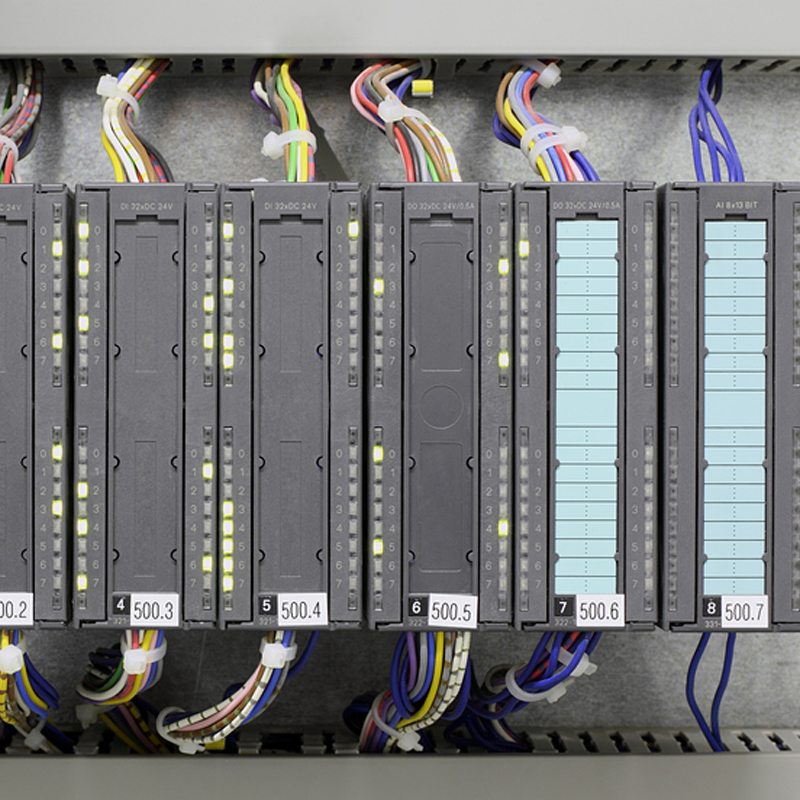
- Input/Output (I/O) Modules: Interface with external devices such as sensors, actuators, and switches, converting real-world signals into electrical signals that the PLC can process.
- Communication Ports: Enable data exchange between the PLC, Human-Machine Interfaces (HMIs), and other devices, often using industrial communication protocols like Modbus, Ethernet/IP, or Profibus.
- Memory: Stores control programs, system parameters, and I/O data, usually divided into ROM, RAM, and EEPROM sections.
- Input/Output (I/O) Modules: Interface with external devices such as sensors, actuators, and switches, converting real-world signals into electrical signals that the PLC can process.
- Communication Ports: Enable data exchange between the PLC, Human-Machine Interfaces (HMIs), and other devices, often using industrial communication protocols like Modbus, Ethernet/IP, or Profibus.

2. PLC Programming Languages
To create, edit, and troubleshoot control programs for PLCs, various programming languages have been standardized by the International Electrotechnical Commission (IEC 61131-3), including:
- Ladder Diagram (LD): A graphical language resembling electrical relay diagrams, widely used due to its simplicity and familiarity for those with an electrical background.
- Function Block Diagram (FBD): A graphical language depicting control algorithms as interconnected functional blocks.
- Structured Text (ST): A text-based, high-level language similar to those used in computer programming, such as Pascal or C.
- Instruction List (IL): A low-level, text-based language analogous to Assembly Language.
- Sequential Function Chart (SFC): A graphical language that represents control processes as a series of interconnected steps and transitions.
- Function Block Diagram (FBD): A graphical language depicting control algorithms as interconnected functional blocks.
- Structured Text (ST): A text-based, high-level language similar to those used in computer programming, such as Pascal or C.
- Instruction List (IL): A low-level, text-based language analogous to Assembly Language.
- Sequential Function Chart (SFC): A graphical language that represents control processes as a series of interconnected steps and transitions.

3. Applications of PLC Controls
PLC controls are utilized across a diverse range of industries and applications, such as:
- Manufacturing: PLC controls manage assembly lines, robotic systems, and packaging machinery, ensuring efficient and consistent production.
- Utilities: In power generation plants, PLC controls regulate critical operations like turbine control, grid synchronization, and fuel handling.
- Oil and Gas: PLC controls are vital in maintaining safe and efficient operations in oil refineries, wellhead control systems, and pipeline management systems.
- Transportation: PLC controls are integral to traffic light control systems, railway signaling, and baggage handling at airports.
- Building Automation: PLC controls help manage lighting, elevators, heating, ventilation, and air conditioning systems in modern buildings.
- Utilities: In power generation plants, PLC controls regulate critical operations like turbine control, grid synchronization, and fuel handling.
- Oil and Gas: PLC controls are vital in maintaining safe and efficient operations in oil refineries, wellhead control systems, and pipeline management systems.
- Transportation: PLC controls are integral to traffic light control systems, railway signaling, and baggage handling at airports.
- Building Automation: PLC controls help manage lighting, elevators, heating, ventilation, and air conditioning systems in modern buildings.

4. Benefits of PLC Controls
PLC controls offer several benefits compared to traditional relay-based control systems:
- Flexibility: PLC control programs can be easily updated, modified, or reprogrammed to accommodate different application requirements, changes in equipment, or system optimizations.
- Reliability: PLC controls are designed to operate in harsh industrial environments, withstanding extreme temperatures, vibrations, and electrical noise.
- Scalability: The modular architecture of PLC systems allows for easy expansion or modification of I/O modules, communication interfaces, or memory capacity.
- Integrability: PLC controls can communicate with a variety of devices and systems using standard industrial communication protocols, enabling seamless integration with HMIs, other controllers, or automation systems.
- Diagnostics: PLC controls provide powerful diagnostic capabilities, enabling the quick identification and resolution of issues within a system.
- Reliability: PLC controls are designed to operate in harsh industrial environments, withstanding extreme temperatures, vibrations, and electrical noise.
- Scalability: The modular architecture of PLC systems allows for easy expansion or modification of I/O modules, communication interfaces, or memory capacity.
- Integrability: PLC controls can communicate with a variety of devices and systems using standard industrial communication protocols, enabling seamless integration with HMIs, other controllers, or automation systems.
- Diagnostics: PLC controls provide powerful diagnostic capabilities, enabling the quick identification and resolution of issues within a system.
Conclusion
PLC controls are a fundamental aspect of modern industrial automation, providing a flexible, reliable, and efficient platform for controlling and monitoring a vast array of processes and equipment. With a thorough understanding of PLC control components, programming languages, applications, and benefits, you can appreciate the integral role PLCs play in optimizing industrial systems and ensuring consistent, high-quality performance across various sectors.
 About the classification, application and development of PLC
  There is a problem with PLC, how to quickly find the cause?
  How many communication methods does Siemens PLC have?
  Siemens PLC S7-300 has communication failure and remote maintenance method
  What are the series and characteristics of Siemens PLC
  Summary of Siemens PLC selection method 2
  Summary of Siemens PLC selection method 1
  What Applications Would You Use PLCs? - Exploring the Widespread Use of Programmable Logic Controllers
  Is PLC Used in Robotics? - Understanding the Role of PLCs in Robotics
  Is PLC Programming Hard? - A Comprehensive Guide to PLC Programming
  What is a PLC in Business?
  What is a PLC Used For?
  What is a Ladder Diagram in PLC?
  Why Doesn't Smart Switch Work on My PLC?
 - Why are PLC Installed Inside an Enclosure?
 Why Are Logical Racks Used in PLC?
  Why There is a Need of PLC in Industry
  Why the PLC is Important
  Why Some PLC Use Only the Basic Additions
  Why Scaling is Done in PLC