
What is PLC Programming?

Programmable Logic Controllers (PLCs) have revolutionized the automation and control industry, becoming the backbone of countless industrial applications. PLCs are designed to provide reliable and robust control solutions for machinery, plants, and production lines. This article will delve into the world of PLC programming, exploring the basics of PLCs, the various programming languages they utilize, and real-world applications that benefit from their use.
1. The Basics of PLCs
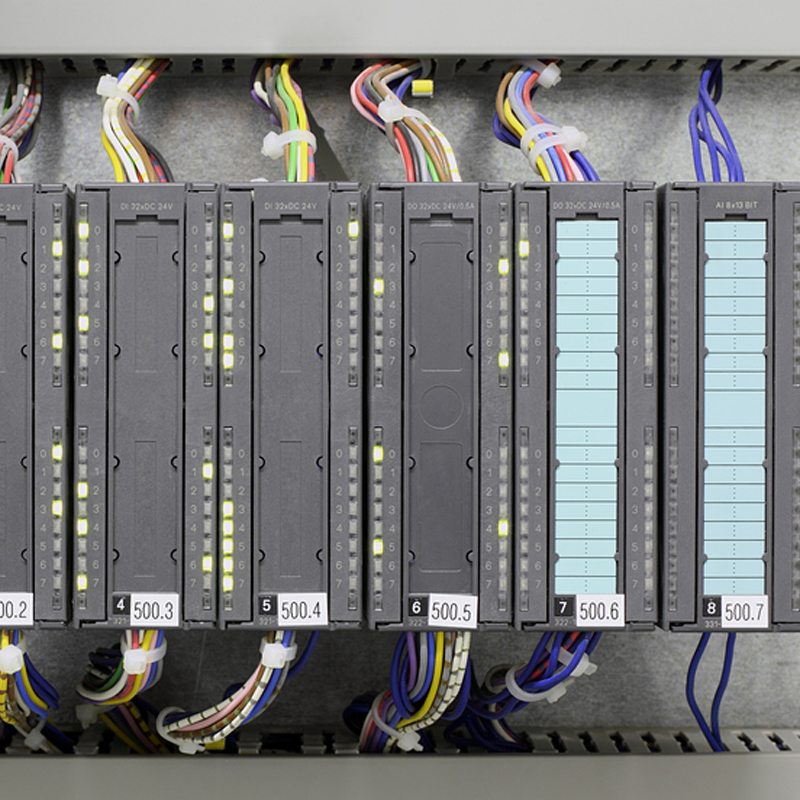
A Programmable Logic Controller (PLC) is an industrial digital computer specifically designed to control and automate complex machines and processes in real-time. PLCs integrate advanced sensors and actuators to gather data, run logic programs, and control machinery accordingly. They are designed to withstand harsh industrial environments and provide various advantages, including:

- High reliability and durability
- Real-time response to changes in inputs and outputs
- Adaptability to different types of industrial applications and machines
- Modular and expandable design for easy upgrades and maintenance
- Easy integration with other automation and control systems
2. PLC Programming Languages
There are several programming languages used for PLC programming, as specified by the International Electrotechnical Commission (IEC) 61131-3 standard. These languages enable programmers to design and implement control algorithms using different paradigms, suiting various types of automation tasks. The primary PLC programming languages include:

- Ladder Diagram (LD): The most widely used PLC programming language, replicating traditional electrical relay logic schematics. It represents a program as a series of electrical circuits and is suitable for applications involving digital logic control.
- Function Block Diagram (FBD): A graphical programming language that displays functions and their connecting dataflow with a series of interconnected blocks. It is ideal for process control and data manipulation applications.
- Structured Text (ST): A high-level text-based programming language similar to BASIC or PASCAL, allowing complex algorithms to be expressed in code form. It is well-suited for mathematical calculations, complex decision-making, and repetitive tasks.
- Instruction List (IL): A low-level text-based assembly language, issuing specific instructions to the PLC. Though less common today, it is ideal for programmers with a strong understanding of assembly languages and looking for maximum program efficiency.
- Sequential Function Chart (SFC): A graphical language based on Grafcet, illustrating PLC programs using sequential steps connected by transitions. It is particularly useful for sequencing and organizing complex operations in a structured manner.
3. PLC Programming Process
Designing and implementing a PLC program generally involves several stages, including:
- Defining project objectives: Before beginning the programming process, clearly outline the automation goals, desired functionalities, and control system requirements.
- Selecting the programming language: Choose the programming language that best suits the specified application and the programmer's expertise.
- Designing the control algorithm: Develop the algorithmic logic that will control the desired processes and meet the project objectives.
- Developing the PLC program: Utilize the chosen programming language to bring the algorithm to life, coding and organizing the program as required.
- Simulation and testing: Simulate the developed program and identify any issues, fine-tuning the code and logic as necessary.
- Integration and commissioning: Integrate the PLC hardware with the developed program and commission its operation, ensuring the system functions as intended.
4. Real-World Applications of PLC Programming
PLC programming is an essential component of modern industrial automation, used across various applications and industries, including:
- Manufacturing: From assembly lines to quality control, PLCs ensure precise and efficient operation throughout the manufacturing process.
- Oil and gas: PLCs are used for wellhead control, platform management, and pipeline operations, ensuring safe, efficient, and environmentally responsible production.
- Water treatment and distribution: PLCs automate processes such as filtration, chlorination, and pressure control, providing consistent and reliable water supply to consumers.
- Building automation: From HVAC systems to access control, PLC programming facilitates streamlined and integrated building management systems that optimize energy usage, safety, and comfort.
- Transportation: PLCs play a crucial role in the management and control of traffic signals, railway crossing systems, and baggage handling at airports.
- Renewable energy: PLCs are employed in the management and control of wind turbines, solar panels, and hydroelectric plants, optimizing the generation and distribution of clean energy resources.

| Manufacturer | ABB |
|---|---|
| Weight (KG) | 0.120000 |
| Item | 086364-001 |
| Product condition | New |
| Packing condition | Maxo Packing |
| Unit pack | 1 |
| Sealed | No |
| Other Reference | 086364-001 |
| Other Reference 2 | 086364 001 |

UPC:Does not apply
Country/Region of Manufacture:Switzerland
Type: 3BHE024577R0101
MPN: 3BHE024577R0101
Conclusion
PLC programming is an essential skill for engineers, technicians, and enthusiasts working in the automation and control industry. By mastering the various programming languages and understanding the intricacies of the PLC programming process, they can create custom control solutions to optimize operations across numerous industries and applications. With the continued growth of automation and control technology, PLC programming will remain a critical component in driving efficiency, precision, and adaptability across the industrial landscape.
 About the classification, application and development of PLC
  There is a problem with PLC, how to quickly find the cause?
  How many communication methods does Siemens PLC have?
  Siemens PLC S7-300 has communication failure and remote maintenance method
  What are the series and characteristics of Siemens PLC
  Summary of Siemens PLC selection method 2
  Summary of Siemens PLC selection method 1
  What Applications Would You Use PLCs? - Exploring the Widespread Use of Programmable Logic Controllers
  Is PLC Used in Robotics? - Understanding the Role of PLCs in Robotics
  Is PLC Programming Hard? - A Comprehensive Guide to PLC Programming
  What is a PLC in Business?
  What is a PLC Used For?
  What is a Ladder Diagram in PLC?
  Why Doesn't Smart Switch Work on My PLC?
 - Why are PLC Installed Inside an Enclosure?
 Why Are Logical Racks Used in PLC?
  Why There is a Need of PLC in Industry
  Why the PLC is Important
  Why Some PLC Use Only the Basic Additions
  Why Scaling is Done in PLC